Thesis I – Project Blog 6

Below are the screenshots of my procedural bridge for procedural art course. This bridge has numerous parameter which can be edited in Unreal. The curve which determines the bridges length can be moved as well. Extended or shrunk. I did noticed Houdini seems to be buggy at times and crashes. UVing is going to prove difficult but I shall see. Hopefully it all comes out well.


Defense 3: Uncanny Valley

As artists, designers, and creators, we often to explore the boundaries of our art. Traversing through different type of styles in search of what calls to us. Nevertheless, an artist will sooner or later stumble upon the style of realism. Realism in art can be defined as “the theory or practice of fidelity in art and literature to nature or to real life and to accurate representation without idealization”. (Merriam-Webster) The desire to create accurate representations of real life has no doubly changed the way we think and interact with digital art in the last couple of decades. Visuals in movies has been inching closer to visually mimicking life. Robotic customer support has progressed in mimicking human voice and expressions. These advancements in technology is remarkable but there is a problem with achieving visual realism. Humans have a high awareness and understanding in recognizing differences between living and non-living. (Angela Tinwell)

As humans are social beings, we are driving by social cues. With these cues, we are aware and can make predictions about interactions we might come across. If these cues are disrupted, mismatched, or inconsistent, we will spot them. Visually speaking, as we increase the realism, the more the information we receive. With the increase of information, the greater chance of error will be spotted. Creating a sense of eeriness or disgust. (Pollick) This phenomenon is called the uncanny valley.

In 1970, the Japanese professor and robotics, Dr. Masahiro Mori, discovered (Hsu) (Pollick) that as an object, such as an robot or a digital character, becomes more humanlike or anthropomorphic, it’s attraction will increase until a point in which there is a drastic negative effect. (Pollick) Examples of objects that lie within the uncanny valley, as Dr. Mori included, was corpse, prosthetics limbs and zombies. (Angela Tinwell) When a viewer experiences the phenomenon, they will feel an eerie sensation, uneased and/or feel disgusted. (Rouse) To avoid such symptoms, Dr. Mori, suggested designer to work until the first peak of the uncanny valley and not to seek out the second peak. (Angela Tinwell) Despite his suggestions, artists have striding to achieve the second peak. Films such as Tin Toy (Hsu), Final Fantasy (Pollick), and The Polar Express (Jakub A. Zlotowski) have failed because of the reactions were negative due to them falling into the valley. Researchers have been studying on what causes this phenomenon. No one is exactly sure what trigger this effect, but multiple hypothesis has been created and might explain why we can experience this phenomenon.

One concept is a survival instinct to help us avoid pathogens. (Shensheng Wang) Some researchers have speculated that humans evolved to predict and react to minor changes in appearances of others. This feeling disgust is might to avoid people that have diseases and prevent us from such disease. (Hsu) This avoidance could be considered as survival tactic deeming the inconsistences in the anthropomorphic character as repulsive. Another concept that could explain what triggers the uncanny valley is our perceptual processing ability. (Shensheng Wang)

As noted in this paper, we instinctually recognize facial features. We are highly sensitive to this information because of the familiarity of it. Researchers suggest that with this heighten awareness we are attracted to certain physical features, shapes, and the health. If the actor is inconsistent to what we know, we instantly become unattracted to it. (Shensheng Wang) If a voice is mismatched to a face or appearance, can trigger this effect as we expect certain features to relate with one another. Movements can drastically increase the effect. As noted earlier, I explained how important biological movements are to humans. Born with the preference to viewing the motions, are naturally familiar with them. If visual appearance and movements mismatch, the eeriness increases because we are unable to predict the outcome correctly. (Shensheng Wang) This disruption of information causes humans to fail at categorizing the other actor. (Pollick) I noted before if we can not categorize another person or actor, we become uncertain and start to fall back on stereotypes to process and understand them. Most likely relying on features we are familiar with. This concept is interesting as it relates to theory of mind and our social cognitive.

So could the uncanny valley occur because we predict, and try to comprehend everything we observe or interact with? Is it because we are social beings seeking out connections with others? I believe it is all the above. We can assume failure to reach total realism of an anthropomorphic character can cause problems with our ability to predict and comprehend. This inability and failed expectations will cause us to begin to panic and feel nervous but not all characters will fall into uncanny valley. There is research that the more an individual interacts with anthropomorphic characters, even if they are eerie, the more they gradually become more familiar. (Angela Tinwell) This repeating habit could circumvent and reducing the effect of the uncanny valley. As we interact more often with anthropomorphic characters, maybe we our perspective will change, and the valley will shrink. Desensitizing us from noticing the inconsistencies between what is living and nonliving.

Thesis I – Project Blog 5

This week, I worked on my studio project. My task was to start the blendshapes and get most done. I got most created and have about 12 left. I plan on working this week on wrapping it up and importing it into Unity and attaching LipSync. Also reminder to me: both top & bottom teeth are not UVed. Copy UVs from the combined game mesh for the final piece.

Here are some tests:


ROUGH ROUGH DRAFT of defense 2: Social cognition

Defense 2: Social Cognition

            Anthropomorphism and theory of mind intertwine with one another. As noted earlier, they trigger the temporoparietal junction in our brains highlighting the connection between, but anthropomorphism goes further than theory of mind. The phenomena can affect our cognitive function that processes how we perceive others, and how we view the surrounding world. (Cherry, Social Cognition in Psychology) Psychologists who study this process called it social cognition.

Social cognition is the “mental processes that (are) involved in perceiving, remembering, thinking about, and attending to the other people in our social world.” (Cherry, Social Cognition in Psychology) These processes influence how people behave, form impressions, and react to others. Simply put, it is the way we store, process, and interact with other living and non-living entities. Many things can encourage the develop of our social abilities such as culture, ideologies, experiences and so on. With anthropomorphism in mind, this cognitive ability grants humans an efficient way for our minds to process social stimulus that engulfs us every day. Predicting, and comprehending is important to us hence why we anthropomorphize the unknown. It puts the current unknown entity into context reducing uncertainty and allows for a simple way to communicate and socially reason to others about them. (Atherton) Therefore, anthropomorphism allows for an efficient way to socially predict and comprehend. Unfortunately, this mental efficiency can come at a cost.

Visually, we are highly sensitive to humanlike characteristics. (Agnieszka Wykowska) Our awareness of the difference between living and inanimate is impressive. As earlier, I explain how we naturally favor smooth human-like movements, called biological motions and how we are born with facial recognition but even with those traits, we make assumptions on what we observe. (Susan R. Fussell) When we interact with entities, we assign categories based on stimuli such as facial features and shapes, body shapes, gender, etc. When humans cannot understand the actor, we unknowingly rely on stereotypes we have learned to process their behaviors, and traits. (Susan R. Fussell) As the actor becomes more similar in appearance to oneself, the more we are likely to reference ourselves and anthropomorphize the non-human entity. (Atherton) Either anthropomorphizing or not, we judge because it allows us to create make assumptions. This assumption allows for forecast of behaviors of the entity and the environment that we are surrounded in. Another important aspect of social cognition is the need for connection that we draw from when we interaction with others.

Human beings desire and crave for some type of interaction that has the potential to produce a connection, emotionally and/or physically. From infants to adults, the social connection between others is a survival instinct. Plucking a person out of their social life, or rather, banish an individual would be a “death sentence for one’s genetic inheritance”. (Atherton) This type of punishment can have an enormous effect to an individual. Lacking or being withdrawn from social connections can influence and trigger the same neural functions that can induce physical pain. (Atherton) This pain may lead the individual to seek for a connection elsewhere. Requiring the person to seek a social connection and will start to anthropomorphize nonhuman entities to satisfy their lust. This basic motivation has been researched and found out that the lonelier a person is, the more they have connected with anthropomorphize objects. (Adam Waytz) Satisfying our need for a connection is important whether its fulfilled by living or nonliving entities. We need “someone” to survive.

Anthropomorphizing has its benefits. It allows us to be able to predict, to comprehend, and to make assumptions about the uncertainty. Lonely individuals that are deprived from social connection and interaction will anthropomorphize and feel at ease. Anthropomorphizing, to me, is about efficiency. This efficiency enables us to expect future actions from others. Removing the uncertainty that we as humans try so hard to unveil and learn what lies within.


Works Cited

Adam Waytz, Nicholas Epley, and John T. Cacioppo. "Social Cognition Unbound: Insights Into Anthropomorphism and Dehumanization." Psychological Science. 19 February 2010.

Agnieszka Wykowska, Thierry Chaminade, and Gordon Cheng. "Embodied Artificial Agents for Understanding Human Social Cognition." Philosophical Transacations B, 19 February 2016.

Airenti, Gabriella. "The Development of Anthropomorphism in Interaction: Intersubjectivity, Imagination, and Theory of Mind." (2018). <https://www.ncbi.nlm.nih.gov/pmc/articles/PMC6231421/>.

Atherton, Gray and Cross, Liam. "Seeing More Than Human: Autism and Anthropomorphic Theory of Mind." (2018). <https://www.ncbi.nlm.nih.gov/pmc/articles/PMC5932358/>.

Cherry, Kendra. How the Theory of Mind Helps Us Understand Others. 26 July 2019. <https://www.verywellmind.com/theory-of-mind-4176826>.

—. "Social Cognition in Psychology." Very Well Mind, 13 August 2019. <www.verywellmind.com/social-cognition-2795912>.

Drubach, Daniel A. "The Purpose and Neurobiology of Theory of Mind Functions." Blanton-Peale Institute, 18 December 2007. Online.

Karolina Zawieska, Brian R. Duffy, and Agnieszka Spronska. "Understanding Anthropomorphisation in Social Robots." Pomiary Automatyka Robotyka. November 2012.

Leslie, A.M. "Theory of Mind." International Encyclopedia of the Social & Behavioral Sciences. Elsevier Ltd, 2001. <https://www.sciencedirect.com/topics/neuroscience/theory-of-mind>.

Nauert, Dr. Rick. PsychCentral. 15 June 2019.

Nicholas Epley, Adam Waytz, and John T. Cacioppo. "On Seeing Human: A Three-Factor Theory of Anthropomorphism." Psychological Review. The American Psychological Association, 2007.

Susan R. Fussell, Sara Kiesler, Leslie D. Setlock, and Victoria Yew. "How People Anthropomorphize Robots." Carnegie Mellon University, 12 March 2008.

Thompson, Brittany N. Psychology Today. 03 July 2017. Website. <https://www.psychologytoday.com/us/blog/socioemotional-success/201707/theory-mind-understanding-others-in-social-world>.


Thesis I – Project Blog 3

Thesis Paper Outline – Matthew Hopkins

  • Quote – “We keep moving forward, opening new doors, and doing new things, because we’re curious and curiosity keeps leading us down new paths.” – Walt Disney
  • Intro (Abstract) – summary of what the paper is about
    1. Anthropomorphism
      1. Where it started
      2. Where it used
      3. Where it is going
    2.  Project
      1. Relates to combing anthropomorphism and A.I.
      2. How artist can easily communicate using the combination
  • Thesis Statement
    1. Interacting with anthropomorphic A.Is can create and intensify participators’ connections, emotionally and physically, towards synthetic beings. Giving an artist the flexibility to communicate directly to their audience by manipulating the human psychology.
  • Background (Intro) – reason why I made my project
    1. Experience
      1. My background & skills
      2. Opportunity to create an interactive installation piece
      3. Learning in skills and tools
    2. Inspired from Disney and other productions
      1. Universal Studios – Harry potter ride attraction with talking walls
    3. Being able to watch participators and visitors reactions
  • Tech Background – describe hardware & software works if they did not understand
    1. Unity, zBrush, Maya, Blender, substance painter
    2. Lipsync – facial animations
    3. Excel – story progression datasheet
    4. Kinect v2 – input device to capture data
  • Defense
    1. Social Cognition
      1. *
    2.  Technopomorphism/Personification
      1. *
    3. Theory of Mind
      1. *
    4. Uncanny Valley
      1. *
  • Description of Project
    1. Overall/Summary
      1. “Project Frame” is a dynamic interactive experience featuring a hanging oil painting that responses to visual and audio inputs. It will detect the presence of the viewers, follow faces and body movements, and listen for speech responses. All of which, will advance down a fixed “script” that the A.I. continuously references. The final presentation will consist of an environment that will be build around the frame for maximum immersion.
      2. Story
        • Pen name* loved his work more than anything, so much so, that his soul was bound to his greatest piece of work, his portrait. Participators can interact and learn from this broken soul. If they are lucky enough, then they can discover his own lives story
    2. Design
      1.  Character
        1. The true meaning behind the man in the painting
        2. Technical story map *picture*
      2. Art style
        1. References
          1. Victorian era
          2. Dishonors and other video games
          3. Realistic stylization
        2. Installation
          1. Layout
          2. Setup
          3. Design
        3. Behind the scenes – Code
          1. Special functions
            1. Interaction data
            2. Interaction mood level
        4. Response from people
          1. Hypothesis
            1. Creeped out, Curious, entertained
            2. Create emotional connection
          2. Results
      3. Reason I choice the decisions I made
        1. How I started on the project
          • Hardware testing
        2. Everything, besides hardware, is designed around the main character
          • Story, background art, interactions
    3. Conclusion


Procedural Art – FX project WIPs

https://drive.google.com/file/d/1pexePetINLsZPUIOR1SMy9eQnfIoIPrS/view?usp=sharing

https://drive.google.com/file/d/1xvwiY5N2ti35Y7dean3LbYtoScr452yK/view?usp=sharing

Character progress

Done this week:

  • the UVs combined
  • character 50% rigged – needs to accessories and hands weighted
  • blendshape readys to be sculpted – zbrush file specially made for the character’s head
  • Throw textures together to get a base maps

Blog Entry – Museum Visit Responses

  1. how does fashion play a role in your work — if you have a character(s) then those design decisions are important OR if you have no humans in your work, discuss the fashion of your favorite game with people in it.

Fashion is important within my work on characters. Depending on how the styles are designed and used, the wardrobes can influence the audience. We can use fashion in many ways as to describe who the character is, when is the character from, and why do they look the way they do. Most of the time, I use fashion to set a setting for the model to reside within. For example, I might pick a certain suit that would set a place and time that would relate to a certain time period. This could evolve into something else as I add elements of clothes that I personally like. Having my own personal preferences influence my characters, allows me to experiment with the endless possibilities that can create a unique character.


  1. how could you make fashion interactive and what statement would that make to wear it?

Today, there are numerous pieces of clothing that is interactive. Programmable LED tshirts, Air-Filtering scarves, heated sports clothing, posture-correcting shirts, app-enabled LED jacks, reactive feather jackets, etc. The list goes on and on. I believe that is the most important part about fashion. Allowing the individual to express themselves through clothing. Most of the interactive clothing seems to be corny or practical. Something that could be interesting would be a coat that can be modularized. Each piece (arms, pockets, collar) can be swapped out with whatever design the individual. Attaching the parts together would be an issue though. Velcro would be the easiest, but durability would be the main issue.

Another unique possibility to make fashion interactive would be a “mood ring” clothing. The clothing would react to external and internal temperature and change color. I imagine the clothing being filled with a liquid to make this happen. The liquid would be the one reacting to the temps. Both designs would give the individual a personalitzed piece of clothing, one being based on their own preferences, and one being affected by the surrounding elements.


  1. Find the piece pictured below, in the Eunice and Julian Cohen Galleria (Gallery 163). Note the name of the piece and then describe your impression of the piece — what are questions it draws forth from you upon viewing?

“Flicker” by Ian Sommerville (1959), 2004 Glass chandelier, flat-screen monitor, Morse code unit, and computer. Unfortunately, this piece was not working as intended. As the blinking was not working. The Morse code unit was not attached as well. With that said, the initial impression of the piece was bland. Without the blink, the piece is only a glass chandelier. At first, I did not even notice it hanging up until someone else pointed it out. If it was lit, even without the blink, I believe it would have caught my eye. If it was working as intended, I would have been curious of the blinks. I might have tried to decode the Morse to figure out what the message was. This would have been a fun piece to experience. Although the name of the piece is confusing. It is straight forward, this chandelier is about Ian Sommerville’s dreamachine “Flicker” as it will blink Morse code text of the piece. I think the title is a weak part of the piece but I wonder if the reason Evans called it that because he imagined that these lights are only talking about Flicker and Sommerville.

Other questions that came to mind are:

What is it trying to say?

How can I figure it out? Without cheating….

Could I use this interaction in one of my pieces?

Would it be a better experience if it eye level? Or is the experience better because it is higher up and massive?

Would lowering the ambient light, and putting it into a darker room, create a better environment (more immersive) to experience this piece?

Would anyone notice the Morse code blinks if the chandelier was piece among other items that resemble its style?


  1. Discuss how you can imagine taking one of the pieces in the exhibit and if you were asked to contribute a work with a similar look/feel/message now, how could you make it into something interactive? Keep in mind the stated message of the Bauhaus as well as the individual feel/reading you get from the piece you choose.

In the Bauhaus exhibit, I was fascinated by the abstract shapes. I wanted to pull them apart and visualize the prints in 3 dimensions. I want to walk around the work in space and see them with depth. The way I would do this would be to create an AR experience. I would create bigger versions of the postcards with the abstract shapes, and balanced forms. The viewers would open an app on a tablet that would allow the user to aim at the prints and the prints would come alive. Depending on the image, the shapes could rotate, scale, dotted lines might move, etc. The viewer could walk around and see the in-betweens of the print in 3D. Allowing them to the freedom to experience the forms that create the Bauhaus style.


Project Frame – “Dom”

Project Frame – “Dom” 


Development Stages


Other Projects


Proposal


Software

  • Blender
  • Maya
  • Substance Painter
  • Pixologic zBrush

Blog Entry – Research and Project Updates – 2019 #13

This week I have been working numerous projects. First project is my human interaction final. As of now, I am struggling to get an heart rate from skin conductivity. I believe I will have to redesign the project to simulate the heart rate when the box is touched and held. Although I do have some time to develop it before the need to redesign it.

The other project I worked on this week was the 3d digital art final. I finally got a character that “fits” my requirement for the project. Here is a screenshot:

I am going to do a polish pass of the face and detail it out with wrinkles, defects, and to make the face asymmetrical. Also the character’s face has multiple layers that allows me to remove the beard and make the face fuller or not but the only thing I am deciding on is the clothes.  I haven’t figured out the style yet but I am feeling something Victorian or Gothic suit.


Tutorials/Interesting Videos:


Idea – Beat Box

Idea – Beat Box?

Description

Beat Box is a self-reflection interaction with a box containing a beating heart. As an interactor opens and holds the metal jewelry box, the heart within will began to beat matching the interactor’s own heart rate using conductivity and a servo motor. Four or more hidden RGB LEDs will light the interior of the box with color. The color and intensity will be controlled by the same input data as the heart. Lower the rate, cooler the colors while higher the rate, warmer the colors and brighter it is within the box.

This piece is merely part of a modified version of a final piece. There would be two boxes on display facing one another. As the interactors hold onto the boxes, each heart would beat to the other person’s heart rate.


Other Options

  • I would add in a small speaker to create some type of ambient, droning beat to match the heart rate.
  • Instead of a metal jewelry box, the heart would be suspended in the heart within an acrylic enclosure as if it was floating. The interaction would be the same, but the input would have to be adjusted. The viewers would have to lay their hand on a platform for the heart to beat.
  • The last alternative for a gallery version would be the main artist would wear a monitor during the show. The heart would beat in sync with the artist in real time for everyone to view.

Sketch

Components Needed

  • Rubber heart
  • Metal jewelry box
  • Acrylic plastic to split the box
  • Arduino board
  • Servo motor with 2 attachments to push the heart
  • Cloth interior – hide electronics
  • RGB LEDs
  • Arduino battery

Required Outputs

  • RGB LEDs
  • Servo Motor to drive heart

Required Input

  • Metal conductive material to get heart rate


Blog Entry – Research and Project Updates – 2019 #11

This week, I have been working on more shapes of the head for my 3d digital art course and my thesis. This character will be fully sculpted so I am trying to find a shape I like. As of now, I am leanings towards the second head. (longer skull, and droopy chin) I do like the fourth one day as well but I believe it is too close to Picard from Star Trek. Nevertheless, I will find the shape and go along with it to finish the project.

Thats the Spot!

Thats the Spot!


Hardware Components Used

  • 1 Green LED
  • 2 Yellow LED
  • 3 330 Ω Resistors
  • 2 10k Resistors
  • 1 Servo Motor
  • Arduino Uno Board
  • Breadboard
  • 5-volt power
  • Soft Potentiometer
  • Flex sensor
  • Cardboard
  • Ducktape
  • Piezo Buzzer
  • 14 wires

Concept


Description:

That’s the Spot! is an interactive game where the interactor controls a servo motor with a soft potentiometer. The motor head collides and bends a flex sensor. As the flex sensor bends, the LEDs will light up from yellow to green. If the interactor discovers the “spot” and holds the position, the piezo buzzer will play a jingle. After the interaction, the system resets and a new spot is selected for a different experience.

As they interact, the interactor should feel determined. They should feel the struggle to find the correct spot to complete the sequence. The personal value of the piece was the challenge of the flex sensor and the board design. Since the breadboard is small, I struggled to create a smooth interaction between the servo and flex sensor. Besides the design, the flex sensor sensitivity is short. I mapped and constrained the values for the interaction to work correctly.

Possible idea for the structure:

I envision this piece as being contained within an acrylic structure with one side being brass. The side of brass would be the interface with the soft pot and LEDs connected too. The rest of the piece would be a clear shell which will allow the interactor to view all the working parts interacting with itself. The style would be a mix of steampunk and sciFi.

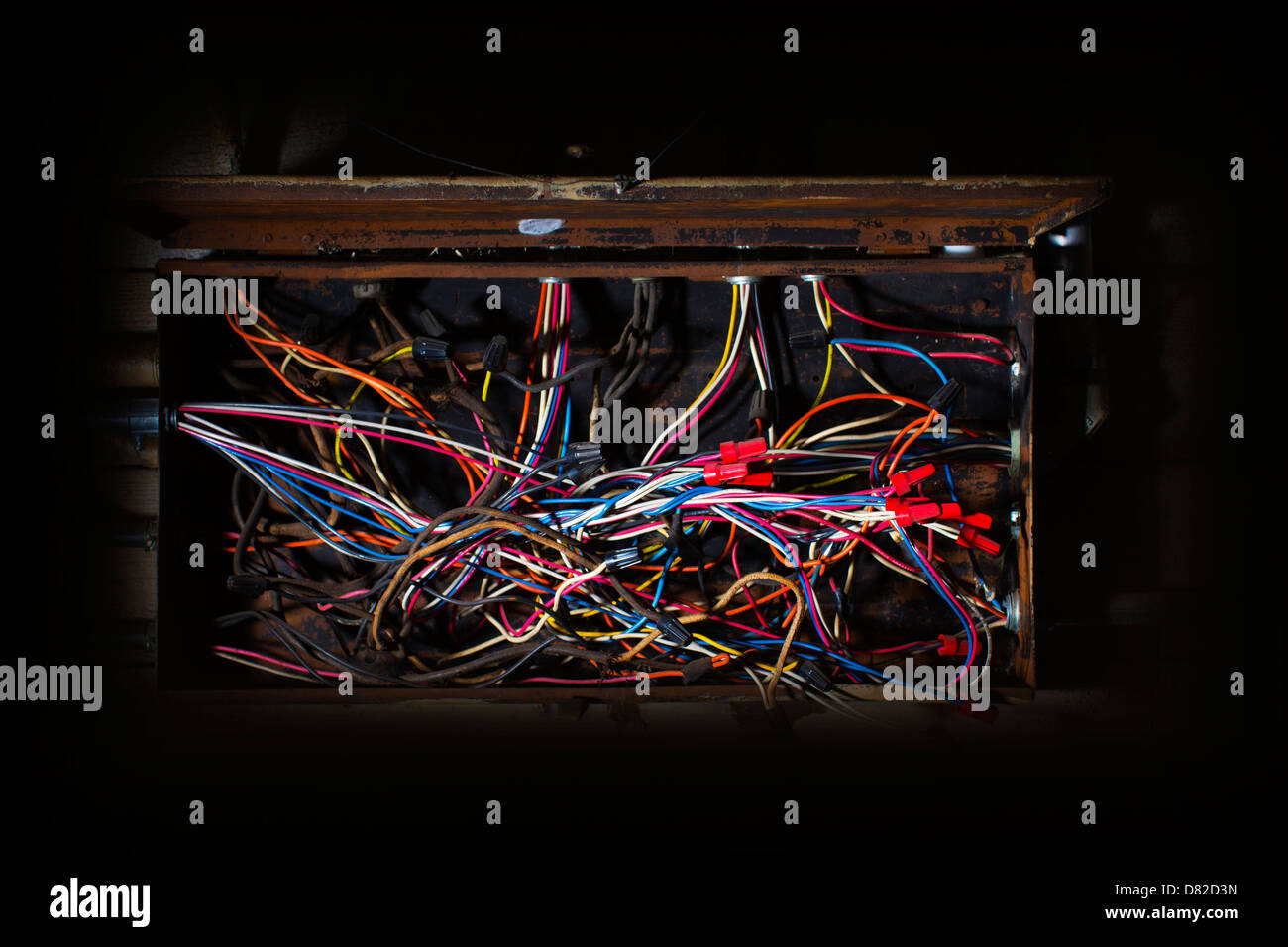
To fill the negative space within the shell, there would be a mess of colorful wires. Example: